Project title: AMPLIFY – Enhancing the Capacity of Practitioners for Building Resilient and Inclusive Communities
Project No.: 2024-1-RO01-KA210-ADU-000256114
Implementation period: 01.10.2024 – 31.12.2025 (15 months)
Funded by: Erasmus+ Programme, Action Type KA210-ADU – Small-scale partnerships in adult education
Total budget: 60.000 €
Partners:
- CONCORDIA Academia (Applicant), Romania
- Roots Research Center, Greece
- Hand in Hand Foundation (Kezenfogva Osszefogas A Fogyatekosokert Alapitvany), Hungary
Project description
Erasmus AMPLIFY Project brought together professionals from Romania, Greece, and Hungary with a shared goal: to strengthen inclusive practices and build more resilient organizations in the social field.
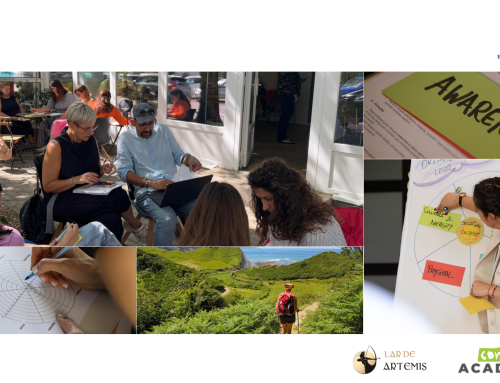
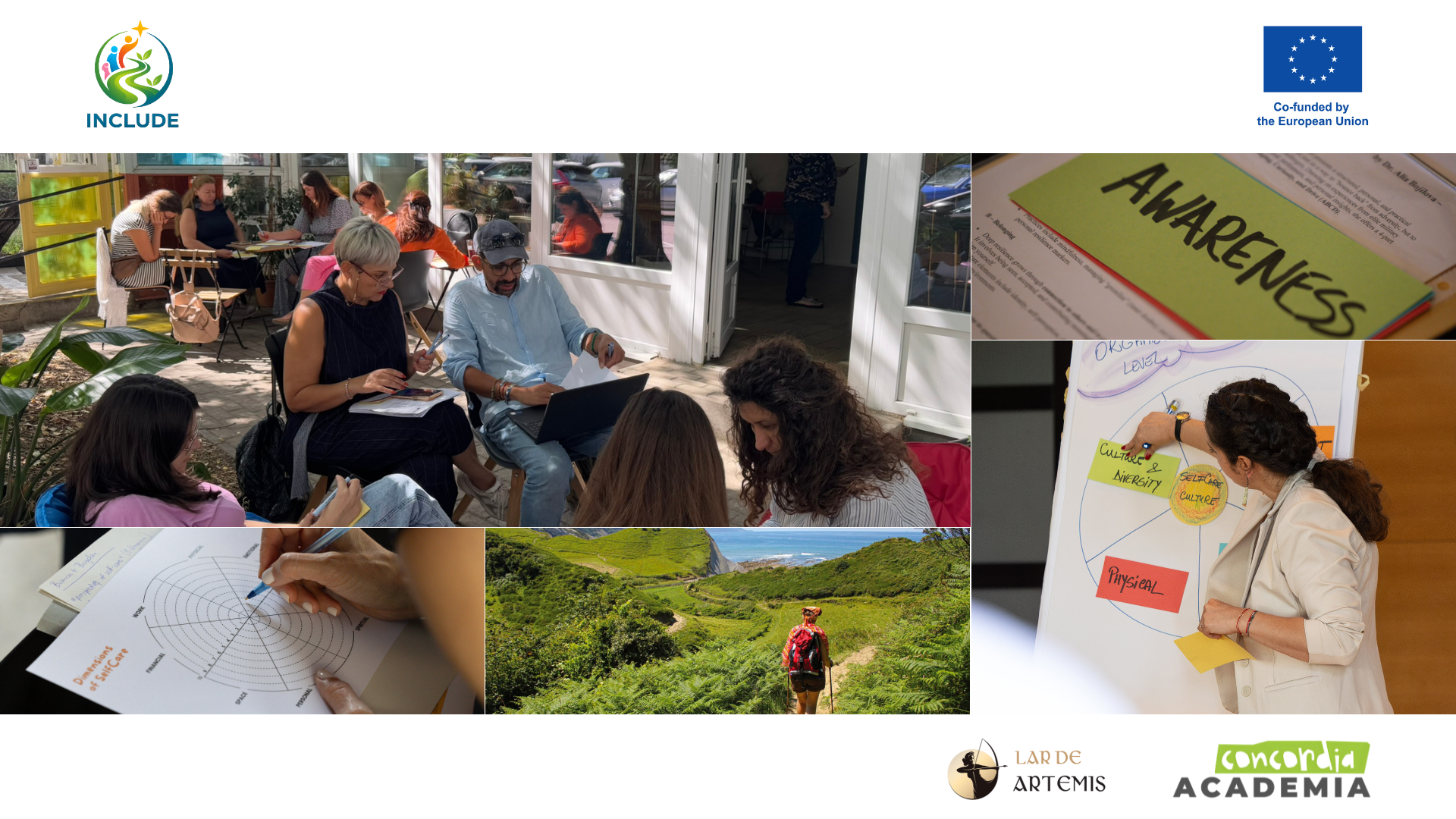
The project combined experiential learning, innovation, and peer collaboration. It started with a three-day residential Bootcamp in Romania focused on social inclusion, diversity, trauma-informed approaches, resilience, and self-care practices. This was followed by ten online coaching sessions that supported participants in reflecting on their professional roles and transforming ideas into concrete initiatives. The learning journey culminated in a Social Innovation Hackathon in Hungary, where practitioners developed and pitched innovative project ideas addressing diversity, inclusion, and organizational sustainability. In addition, dissemination workshops were organized in each partner country, engaging local stakeholders and expanding collaboration at community level.
AMPLIFY directly targeted 21 practitioners working with vulnerable groups, including youth at risk of exclusion, refugees, ethnic minorities, young people with disabilities, care leavers, and institutionalized children. Indirect beneficiaries included staff members of partner organizations and stakeholders involved in dissemination events. In the long term, the strengthened competences, innovative project ideas, and inclusive practices developed through AMPLIFY are expected to improve services and positively impact up to 1,000 vulnerable children, young people, and their families.
Impact
AMPLIFY did more than run a training program. It strengthened a community of 21 practitioners from Romania, Hungary and Greece who now design their work with inclusion, resilience and self-care at the core. Through the Bootcamp, coaching sessions and the Social Innovation Hackathon, participants developed 18 concrete project ideas addressing real needs in their organisations and communities, from support for young mothers and care leavers to emotional wellbeing programs and diversity-driven community initiatives. The project also fostered long-term transnational cooperation, creating a peer network that continues beyond the formal end date. Most importantly, AMPLIFY contributed to a cultural shift: practitioners reported greater confidence, stronger collaboration skills and a clearer understanding that resilient organisations are built by professionals who are supported, reflective and empowered to innovate.
Project ideas and action plans resulting from the AMPLIFY Learning Programme
- Niki Zafeiropoulou and Eirini Tzovla (Roots Research Center / Municipality of Lykovrisi Pefki, Greece) developed R.I.S.E. – Raising Inclusive Schools through Empowerment, a programme aimed at building the capacity of school communities to implement inclusive practices.
- Panagiota Giapoutzi (OIKANOS KOINSEP, Greece) proposed Digital Kin, a project exploring digital tools to strengthen community support networks.
- Miklós Fehér (Hand in Hand Foundation, Hungary) presented From Home to Your Own Home, a structured transition programme supporting young people with learning disabilities in moving from residential care to independent living.
- Magdalini Alexandropoulou and Alexandra Neraida (MAZI SOU MAMA, Greece) developed Stories of Motherhood, a participatory project amplifying the voices of women during pregnancy and postpartum through thematic workshops and collective art creation.
- Zsófia Riczkó and Edit Szabó (Prizma School, Hungary) proposed Finding the Right Focus, a project supporting parents of children with disabilities in preparing for their child’s transition to supported housing.
- Daniel Bliort (Trinitas Special Vocational School, Romania) presented Integration/Community, a proposal focused on community engagement and social integration for students at a special school.
- Márta Lili Tóth (Hold My Hand Foundation, Hungary) developed Emotion Workshop for Intellectually Disabled Adults, a project strengthening emotional identification and expression through creative and visual methods.
- Cătălina-Cristina Crăciun (DGASPC District 6, Bucharest, Romania) presented With You, Mama, inspired by the Greek MAZI SOU MAMA model, creating a support community for young mothers through practical workshops and the provision of essential care kits in Romania.
- Anca Loredana Ioniță (Hospice Casa Speranței, Romania) developed Self-Care Space for the Day Centre Team, a structured wellbeing initiative for social workers and healthcare staff.
- Elena Păsărică (Favor Association, Romania) presented Unchained through Art, an arts-based programme for vulnerable groups as a pathway to self-expression and social inclusion.
- Daniela-Georgeta Catanet (Ronald McDonald Foundation, Romania) developed an Automated Document Completion Tool in Excel/VBA, a digitalization solution designed to reduce administrative burden and allow staff to dedicate more time to direct beneficiary support.
- Dalma Gordan (Emmaus Solidarity Association, Romania) proposed Inner Trip, a series of non-formal workshops for young people leaving the child protection system, focused on self-awareness and independent living skills.
- Annamaria Kovacs (Hand in Hand Foundation, Hungary) presented Community for All, a transnational inclusive community campaign integrating diversity and inclusion principles into organizational outreach.
- Ioanna Tsimopoulou (Roots Research Center, Greece) developed a proposal for A Protocol for Resilience-Focused Interventions for Youth in Care, aiming to standardize and scale evidence-based resilience work with young people.
- Oana Derscaru (DGASPC Sector 3, Romania) presented IdeoKidz, a project offering integrated services for children with behavioural difficulties.
- Ioana Rascanu (Ateliere fără Frontiere, Romania) developed Red Shoes Hub, an initiative against domestic violence providing support, visibility, and community engagement for survivors.
- Cristóbal Campero (Chance Lab Association, Hungary) proposed Szabad Suli (School for Freedom), an alternative educational model promoting autonomy, creativity, and inclusion.
- Elena-Cătălina Mușat (DGASPC Buzău, Romania) presented Smiley Faces, a project aimed at improving the emotional wellbeing of children in the social assistance system.
Other results
Effective projects do not start with activities. They start with real needs and a clear understanding of the change we want to create. This video series offers a structured and practical journey through the essential elements of project design. Step by step, you will explore how to move from identifying needs to defining objectives, designing coherent activities, measuring results, managing risks, and ensuring long-term impact. Each short lesson focuses on a key building block of strong project logic, helping you develop projects that are relevant, realistic, measurable, and sustainable. Whether you are new to project development or seeking to refine your approach, this series will strengthen your capacity to design interventions that truly make a difference.
The development of this online lesson series was co-funded by the European Union through the Erasmus+ Programme, within the framework of the project AMPLIFY – Enhancing the capacity of practitioners for building resilient and inclusive communities, project no. 2024-1-RO01-KA210-ADU-000256114. The views and opinions expressed are those of the author(s) only and do not necessarily reflect those of the European Union or the ANPCDEFP. Neither the European Union nor the ANPCDEFP can be held responsible for them. For more information: Ina Dreglea, Project Manager, ina.dreglea@concordia-academia.ro